Getting Started with Character Styling
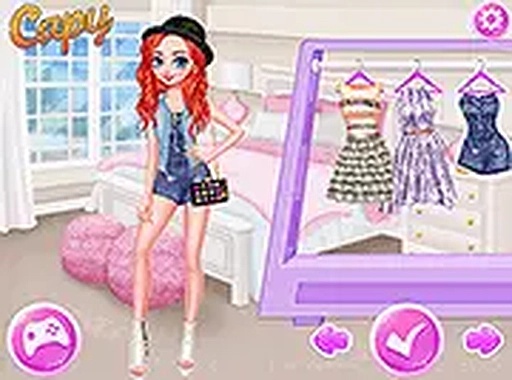
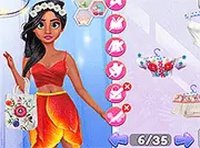
Players begin by selecting a character to dress from a small group of available personalities. Each character has a neutral base appearance, ready to be transformed through clothing choices. The interface presents categories for tops, skirts, and footwear, allowing for layered combinations. Accessories appear in a separate section, featuring items shaped like pizza slices, cupcakes, and other playful designs. The selection process uses straightforward click or tap actions, making navigation intuitive for younger audiences.
Clothing Options and Mix-and-Match Mechanics
The wardrobe offers multiple color variations for each clothing type. Tops range from simple tees to more elaborate blouses, while skirts include both short and long styles. Footwear choices cover flats, boots, and sandals in various hues. Players can freely combine any top with any skirt and any pair of shoes, creating hundreds of potential base outfits. The system does not restrict combinations based on color matching or style rules, encouraging experimentation. This open approach lets users explore personal taste without predefined limits.
Accessory Selection and Visual Appeal
Accessories serve as the focal point of each creation. Unlike typical jewelry or handbags, these items take the form of food-inspired shapes such as pizza slices, cupcakes, and ice cream cones. Each accessory is designed with bright colors and simple outlines that complement the clothing palette. When placed on the character, the accessory appears prominently, adding a whimsical touch to the overall look. The contrast between realistic clothing and playful accessories creates a unique visual style that distinguishes this game from standard dress-up titles.
Platform Accessibility and Technical Requirements
This game operates entirely within a web browser, requiring no software installation or account creation. It functions on both desktop computers and mobile devices, adapting to different screen sizes automatically. Touchscreen users can tap directly on clothing items, while mouse users click to select. The game loads quickly even on slower internet connections, as it uses lightweight graphics. A full-screen mode is available for users who prefer an immersive view, though the standard windowed mode works well for quick sessions.
Creative Freedom Without Time Pressure
There are no timers, scores, or objectives to complete. Players can spend as much time as they like on a single outfit, changing pieces repeatedly until satisfied. The absence of failure conditions means that every combination is considered valid. This design philosophy supports relaxed play, making the game suitable for short breaks or extended creative sessions. Younger players, in particular, benefit from the lack of pressure, as they can learn color coordination and personal style at their own pace.
Encouraging Experimentation and Personal Expression
The game rewards curiosity by allowing unlimited changes. Trying unexpected color pairings, such as a bright top with patterned shoes, often leads to surprising but pleasing results. Mixing different accessory shapes with various clothing styles helps players understand how small details affect an overall ensemble. Since there are no right or wrong choices, users develop confidence in their design decisions. This environment fosters creative thinking and visual literacy without formal instruction.
Compatibility
Play on Any Device | Chrome / Safari / Edge Recommended