Core Number Mechanics
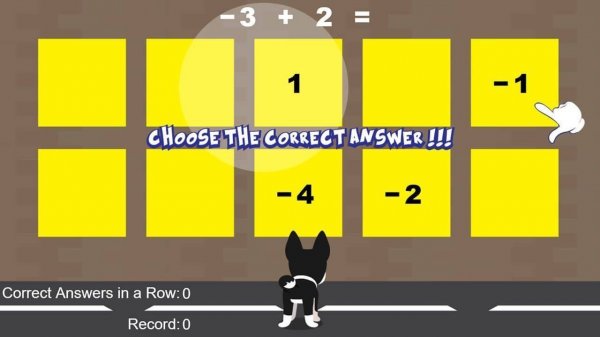
At its heart, this game presents players with arithmetic problems that mix positive and negative values. Each question requires careful attention to signs, as adding a negative number is equivalent to subtraction. The interface displays one problem at a time, with multiple choice answers arranged clearly. This focused approach helps children grasp the concept of integer operations without feeling overwhelmed. The game reinforces the idea that numbers can exist below zero, a fundamental step in building strong numeracy skills.
Adjustable Challenge Levels
Players can choose from three distinct tiers of difficulty. The first tier uses smaller numbers and simpler combinations, ideal for those just starting out. The middle tier introduces larger values and more varied sign combinations. The highest tier presents complex problems that require quick mental arithmetic. This structure allows learners to progress at their own pace, building confidence before moving to harder material. The system adapts naturally to each player's growing ability.
Timed and Relaxed Modes
Two distinct play styles accommodate different learning preferences. The untimed mode removes all pressure, letting children take as long as they need to solve each problem. This is particularly useful for understanding new concepts. The timed mode adds a gentle sense of urgency, with faster correct answers earning higher scores. This dual approach means the same game can serve both as a teaching tool and a speed challenge, depending on the player's mood or goal for the session.
Visual Design and Feedback
The game uses bright colors and simple shapes to keep the screen uncluttered. Each correct answer triggers a positive visual cue, while incorrect responses show the right answer without harsh penalties. This immediate feedback loop helps learners quickly identify and correct mistakes. The friendly character reacts to each answer, providing encouragement that keeps children engaged. The overall design prioritizes clarity so that the math remains the main focus.
Building Long-Term Skills
Regular play encourages the development of automaticity with integer arithmetic. By repeatedly working through problems, children internalize the rules for combining positive and negative numbers. This practice translates directly to classroom performance and standardized tests. The game's structure rewards persistence, as higher scores become attainable with consistent effort. Parents and teachers can use the built-in progression as a simple benchmark to track improvement over time.
Compatibility
Play on Any Device | Chrome / Safari / Edge Recommended